
Thai gift etiquette: do's and don'ts
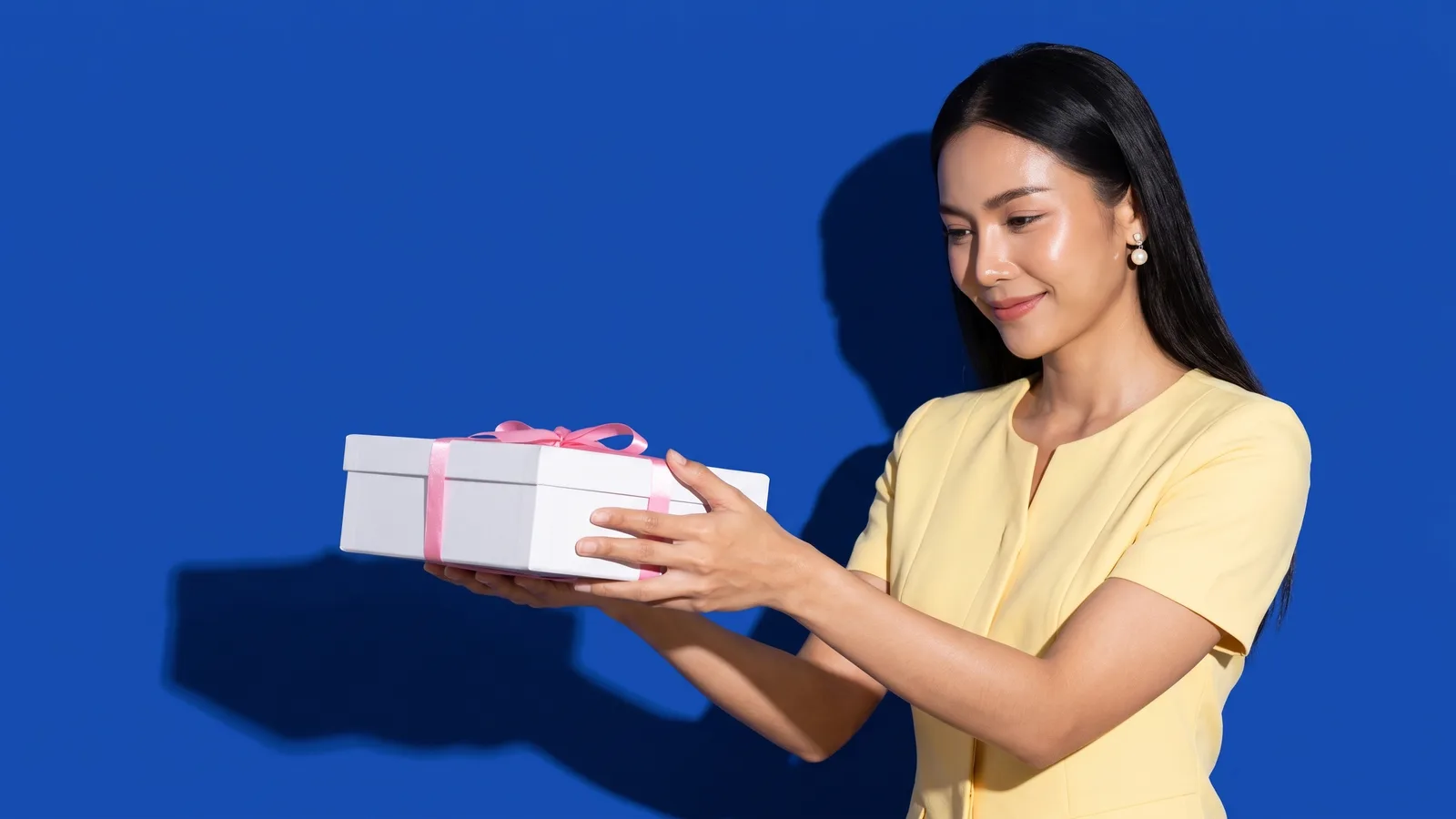
Giving a gift in Thailand is easy once you know a few beliefs and a few gestures. Here is what to avoid, how to give well, and a step-by-step routine you can use anywhere from a host's home to the office.
Gifts many Thais avoid (and the belief behind each)
Suan Sunandha Rajabhat University's library lists these Thai gift beliefs:
- Sharp things (knives, scissors): believed to cut the relationship and bring bad luck.
- Handkerchiefs: believed to bring sadness, because they are for wiping tears.
- Shoes, for a partner: believed to make the couple part ways.
- Flowers used at funerals or with unlucky names.
These are beliefs, not rules. Not everyone minds, but for elders, in-laws or someone you do not know well, it is easy to avoid them.

How to give a gift in Thailand: step by step
- Choose something to share or use, like fruit, sweets or a small box of cakes.
- Wrap it neatly in a bright colour, with a ribbon. Presentation counts as much as price.
- Take the price tag off.
- Greet first. For an elder, a wai, a slight bow with the palms together.
- Hand it over with both hands, or with the right hand, and a small smile.
- Say a short wish, or write one on a card.
- Let it go. Do not ask them to open it now.
Do's
- Give with both hands, or with the right hand. Wikipedia's etiquette overview notes the right hand is used for offering a gift or handing something over in much of Asia.
- Wrap it neatly. Presentation counts as much as price.
- Say a short wish when you hand it over, or write one on a card.
- Bring something to share when you visit a home, like fruit or a box of small cakes.
Don'ts
- Do not expect it to be opened in front of you. Many Thais open gifts later, to be polite.
- Do not hand it over with your left hand alone.
- Do not make a show of the price. Take the price tag off.
- Do not touch someone's head or point your feet at them. The same Wikipedia overview notes the head is considered sacred in Thailand and the feet unclean.

Situations: quick tips
| Situation | Good idea | Tip |
|---|---|---|
| Visiting a home | Something to share | See what to bring to a Thai home |
| Meeting a partner's parents | Sweets or fruit for the table | Wai first, both hands |
| Office or colleague | A small box to pass around | Keep it modest |
| Gift from abroad | Order locally in Bangkok | See send a gift to Bangkok from abroad |
Tips
- When in doubt, choose food to share. It ends up on the table and starts a conversation.
- Small numbers work. A box of three or five is easy to share.
- A message matters. A short wish on a card turns a snack into a present.
If you want something easy to share, our madeleine gift boxes come with a ribbon and a wish card, or you can build your own box. New to madeleines? Start with what is a madeleine.
Sources: Suan Sunandha Rajabhat University library, "ของขวัญและความเชื่อในเอเชีย"; Wikipedia, "Wai (gesture)" and "Etiquette in Asia" (checked 14 October 2026).
Questions
What gifts should you not give in Thailand?
Suan Sunandha Rajabhat University's library lists sharp things like knives and scissors, handkerchiefs, shoes for a partner, and flowers used at funerals or with unlucky names. These are beliefs, not rules, but they are easy to avoid.
Should I give a gift with my left hand?
No. Use both hands, or your right hand. Wikipedia's etiquette overview notes the right hand is used for offering a gift or handing something over in much of Asia.
Will a Thai person open my gift in front of me?
Often not. Many Thais open gifts later, to be polite. It is not a sign they do not like it.
What is a wai?
The wai is the Thai greeting: a slight bow with the palms pressed together. A small wai before handing a gift to an elder is a respectful touch.
How much should I spend on a gift in Thailand?
Modest is fine. A thoughtful, nicely wrapped gift matters more than the price. Take the price tag off.